A long, long time ago (holy cow, five years ago!), I wrote this article about kicking my muse to the curb.

Thanks to a workshop at the San Francisco Writers Conference this year, I have changed my mind.

When I first started writing – back in the day when dinosaurs ruled the earth – I subscribed to the idea of a muse. My muses would invariably take the form of human beings. Most likely, they would be human being males that I was romantically involved with, or were men I longed to be involved with, or were guys who had snubbed me and therefore I wrote as a way to beat down my enemies with the power of my words. I’d never really puzzled through the fact that my relationships (i.e. muses) were somehow compelling me to write, that they were responsible for my thoughts. All I knew is that I was most prolific in times of conflict and angst.

As a writer, it’s nice to have a fairy godmother muse to sit on your shoulder. She can tap you with magic dust whenever you need her and voila! you begin to type as though your keyboard is on fire and you only have twenty minutes to get it down before it spontaneously combusts, Mission Impossible style.

Yee-ahhhh… That might work for some people. I happen to be more pragmatic. If I don’t cattle prod myself to write something everyday, I’d never have completed three novels. Which is why I decided back in 2009 to kick my muse to the curb and set a schedule.

Five years after writing that article, I wandered into a SFWC workshop totally by accident (because the workshop I’d wanted to attend was standing room only and I really needed to sit down) with Lisa Tener regarding writing in the zone. She insisted that we must find a muse, and went about describing other writers’ various muses: mice, insects, old men, young children, birds, etc. Dictionary.com’s definition is the goddess or the power regarded as inspiring a poet, artist, thinker, or the like.

Our first task was to close our eyes and imagine ourselves going down a path in the woods toward a house where we would then introduce ourselves to our muse. We’d ask for direction and guidance.

(You can imagine here how I reacted. With total skepticism. And with horror, as I had killed off my own muse a long time ago. If I revived my muse, I feared he/she would probably kick my ass in retaliation.)

I decided to humor her and play along, but when I got to the house (invariably located in Golden Gate Park) and opened the door, instead of a room, I walked onto the large plain of Ocean Beach.

I mentioned this, and Lisa said, “Yes! That’s good. Water can be a great muse, and the ocean is vast.” Whodathunkit?

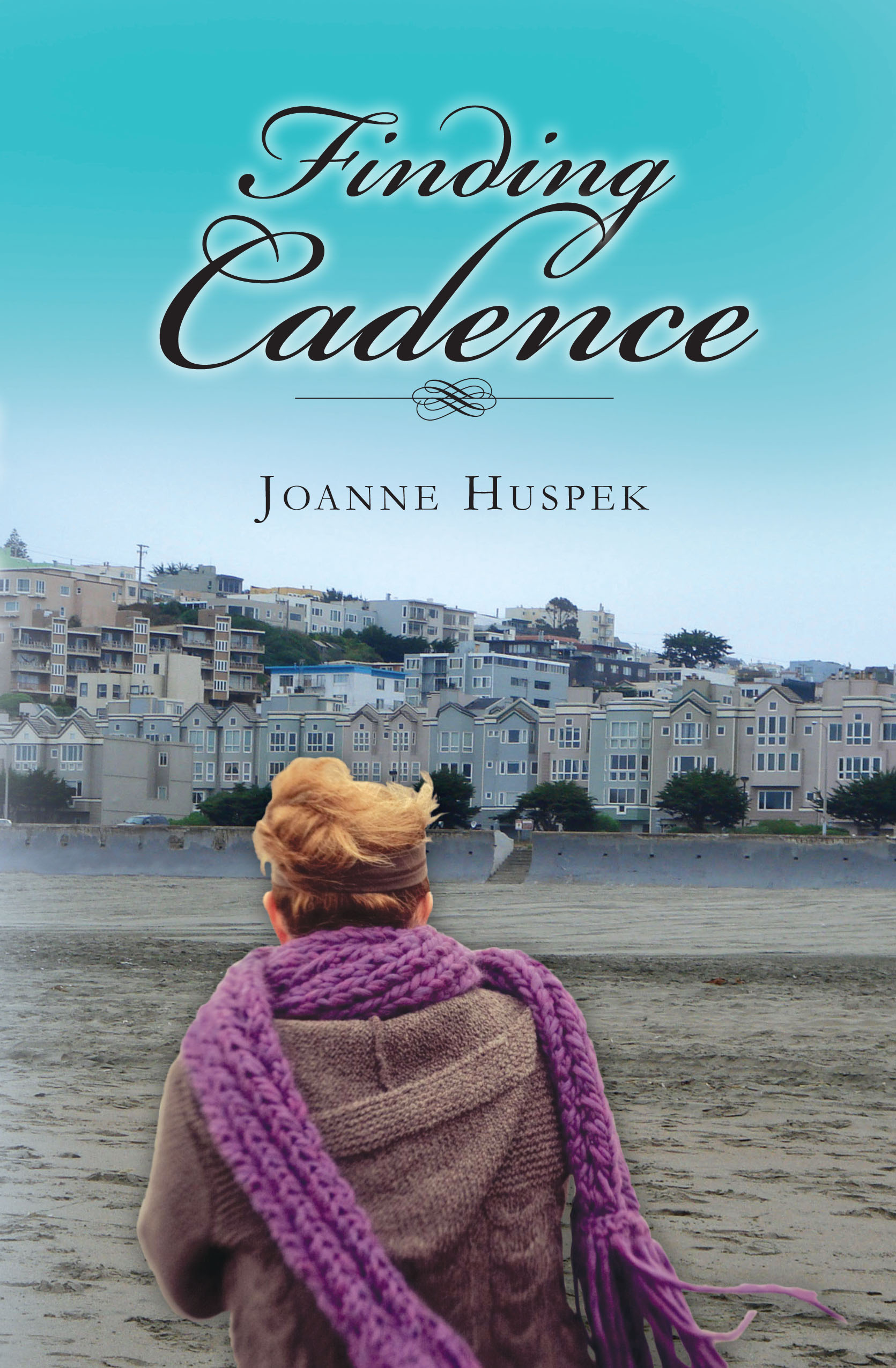
Later on, as I was sorting through my handouts of the day, I thought about using the ocean as a muse. Haven’t I been doing it all along? Isn’t that why I return to San Francisco on a regular basis? To stay by the beach, walk near the water, fight a biting wind, collect my thoughts? Isn’t this where my stories are born? My attachment is so great, I’ve used the photo of the Richmond, taken from the beach, on my blog. This photograph has been enlarged and framed and hangs over my bed, so when I feel a need to connect to Ocean Beach, I can look at it whenever I want.

I might have wanted to deny my muse, but I will no more. After all, it’s been there the whole time.
Posted in books, editing, Finding Cadence, indie publishing, people, querying, reading, rewriting, Self publishing, womens literature, writing | Tagged , , , , , , , , 3 Comments

It had to happen.

After weeks of Internet back and forth on the self-publishing versus traditionally publishing options (which kind of blossomed into WWIII), with articles like this,  and this, and this monstrosity of a blog post that took me three hours to read and that time was spent on the post, not counting the comments, you’d figure that some of that fiery emotion still lingered in the air.

The keynote speaker for the 2014 San Francisco Writers Conference was Barry Eisler, renowned writer of thrillers. He is also an engaging and charismatic speaker. While the ensuing address wasn’t exactly a s*** show, the sparks were definitely flying, mostly because Mr. Eisler gave a spirited speech on the current state of publishing. He listed toward the side of self or indie publishing, giving his own personal experiences and the reasons why he decided to go that route, while acknowledging the fact that there is still a place for an author to choose the traditional publishing route of gaining an agent and then a Big New York Publishing House. (I’m not going to rehash his words; you can click on any of those above links to get the gist of the debate.)

Keep your eyes wide open and make a decision based on gathering all of the facts. That’s what I got out of this address. Sage words for everyday living, wouldn’t you say?

I observed a wide range of reaction in this crowded room of 500 attendees. Keep in mind that the room was not only full of wannabe writers who have never published a word either on their own or with assistance, but it was also filled with authors, agents, editors, and those who make their living on the “legacy” model. In between the green with a freshly completed manuscript and the greenest at the top of the food chain were people like me, who had attended the conference before, or who had some success in self publishing, or who had started companies specifically designed to make the self publishing experience easier. By the end of Mr. Eisler’s speech, some were nodding in agreement, some were visibly blanched and upset, and others experienced a light bulb moment of “Oh! I can do that?”

At the end of the address, Michael Larsen came up and gave a just as spirited counterpoint to everything Barry Eisler said.

sfwc

I don’t know Barry Eisler. I’ve never read his books, as they’re not in the genre I like to read for enjoyment, but I might buy one of them to throw on the To Read pile that I can now build a small house with. To be honest, I don’t know any of the authors who have broken away from the traditional publishing model. I know the most visible ones write great books and have strong followings and they’re all immensely wealthy as a result. I do know that what works for one might not work for another.

On the other hand, I know agented authors with published works who haven’t seen book sales rise over 100.

I’m the kind of person who doesn’t believe in leprechauns or pots at the end of the rainbow. I buy lottery tickets, but I’m pretty sure I’m never going to win. I missed out on the eBay and Martha Stewart IPOs, and totally missed the bitcoin boat altogether, which means I will work like a dog until I drop dead.

Economic success is a combination of creating a viable product, brilliant marketing, being at the right place at the right time, finding a loyal niche and consistently delivering. There’s also a bit of serendipity in the way the cards fall; all the stars have to be aligned perfectly, especially in the writing world where a book is a work of art and the art of gatekeeping is a subjective (i.e. artistic) one. Not everyone can find that level, if it were that easy, everyone would be rich and famous.

The reason why I attend the San Francisco Writers Conference is that it consistently provides a wealth of information on the writing world, in craft, in marketing, in giving the opportunity for writers to briefly touch those in the publishing world. Michael and Elizabeth have been generous in allowing all points of view, thereby giving the attendees many options.

I go each year, because by mid-February, I need a recharging badly.

And it doesn’t hurt at all when the sparks fly.

Posted in books, DIY, editing, Finding Cadence, indie publishing, Joanne Huspek, querying, reading, rewriting, Self publishing, VIRTUALLY YOURS, womens literature, writing | Tagged , , , , , , , , , , , 1 Comment

Welcome to WordPress. This is your first post. Edit or delete it, then start blogging!

Posted in Uncategorized 1 Comment

This will be a short post, because I have a thousand things to do before I leave Thursday (way early) morning.

SFWC Sign up Now

1. I am so ready for San Francisco! I’m always ready for the City by the Bay, but right now I am craving some interaction with creative types, authors, editors, movers, shakers. The San Francisco Writers Conference couldn’t come at a better time. Besides, it’s so cold and snowy here, I need a mini-escape LIKE RIGHT NOW.

2. After the last year, I’m finally feeling like a real writer! That’s because I’ve been writing or editing or outlining almost every day. It’s been tough to get on a schedule, and believe me, you would know. I’ve been bitching about my Real Life problems for years now. However, I’m getting better at carving out a space for me and my writing time. It’s true, if you write, you will write more.

3. I’m planning another book, this one YA. Like I don’t have enough to do? This one will have death as a theme, and I haven’t decided whether I should put my story in Michigan, Minnesota, or California. Hopefully, it’ll be funny. Maybe not.

4. I’ve started editing Virtually Yours Forever (for those of you who were wondering what happened to my Beanie Moms), and I hope to self-publish the sequel by the end of the year. I already have a eCover design, it’s just a matter of getting the story to the point where it makes sense. There’s a lot going on with my moms!

5. I’ve undertaken another launch, but since it’s in the gestational stage, I’m not going to talk about it. Don’t want to jinx it.

I know it’s only Monday, but I’m already packing. I’ll be gone for longer than usual (ten days) so I’ve been plotting and planning my Real Life so there won’t be any Real Life disasters while I’m gone.

Finally, I’m praying that Mother Nature will cut me a break this week. Please don’t send any monster blizzards my way on Wednesday or Thursday, PLEASE. I want all airlines to be running on time, without delay. If I miss one second of this conference, I’m going to be super PO’ed.

Posted in books, editing, Finding Cadence, indie publishing, Joanne Huspek, music, violin, writing, women, life, NaNoWriMo, people, querying, reading, rewriting | Tagged , , , , , , Comment

For some reason, I felt that 2013 was a banner year in my writing endeavors. Never mind that it took me the entire year to re-work and re-edit my first manuscript…even though that was a major undertaking full of major hurdles, I got the job done, which is a major accomplishment. It’s as good as it’s going to get; in fact, I can’t think of anything I left out. (Of course, someone is going to find something I missed – that’s a given.)

On to a new year, and I have plans for 2014. Now I’m tackling other writing tasks, such as editing the other TWO manuscripts that need my attention, and coming up with a new story from bits and pieces of other stories.

One thing I’ve learned from the last year is that 1. It’s not completely God-awful to forsake all of your other projects and concentrate on one thing (I honestly thought I was too ADD to try focusing on one project, much less succeed at finishing one project all the way through), and 2. It helps to get as many sets of eyes on your work as possible. I could possibly throw in a #3. – I’m getting better. Edits of subsequent novels are going so much faster, because now when I write a first draft, I catch myself before I make a mistake. You can teach an old dog new tricks!

🙂

San Francisco Writers Conference

I’ll be attending the San Francisco Writers Conference again this year, and only have twelve days to get it together. While I’ve signed up for the agent speed dating, I’m not so interested in pitching my work this year, and will look upon the experience as an exercise in sociability – something I’m not so good at. Of course, I’ll network with other writers, some who like me attend every year, but my main objective is to learn as much as humanly possible, and maybe absorb some positive vibes. I’m not totally down in the dumps about writing or life in general, but with this Massive Winter, I could use a little rah-rah to rally my flagging ambition.

To kick start some of my storytelling, I’ve signed up for Christina Katz’s 21 Moments Challenge. I suggest all writers give it a whirl. (I’ve just started, so I can’t tell you yet how helpful it is, but I’ll give a full report later.) The price is certainly right – $21. I need a cattle prod – I mean, classes – to get me going. I’m only a partial self-starter.

The new year is still young, so make the best of it now! I see good things in my future, and hope you do too.

Posted in DIY, editing, Finding Cadence, indie publishing, Joanne Huspek, NaNoWriMo, people, querying, reading, rewriting, Self publishing, VIRTUALLY YOURS, womens literature, writing | Tagged , , , , , , 1 Comment

OK, so I’ve been over this manuscript, what? A million times? Rough draft, second rough draft, third rough draft, final draft, three edits with MR ED, after which, a year of self-imposed edits, one edit with a completely different, third party editor, several contests, a half dozen SmartEdits, another edit this month, and finally a proofread or two. I even thought of a scene that I’d forgotten to put in, and have bookmarked a scene to take out in case I can’t get permission to quote two lines of lyric. This baby about as tight as it’s going to get.

And so today, with tentative fingers, I decided to open my query (newly polished from a LitReactor query class I took in December). I spiffed it up, and then opened QueryTracker and scanned down my list of agents (since it’s January, thankfully many have opened to queries again), studied their web sites, including the types of clients they represent and the titles of books they’ve helped get published, and, OH MY GOD, I clicked SEND on three of them.

“No big deal,” you say.

Are you shitting me? I started hyperventilating after the first one.

Especially when I saw my email after I sent the first one. Why is it my formatting is so wonky? Many agents want the first few chapters imbedded into the email. Once I copy and paste, the formatting goes right to hell and stays there. I’m not a newbie, I know how to format a manuscript now. I’m doing it the right way. And this story is so straightforward; there are no text messages and very few email, only some italics, so it’s not like I’m trying to perform literary gymnastics.

It’s not just the query letter, or my email server problems. I’m well acquainted with my story, and it think it’s a good  great one. I’m well-versed in penning business letters, I do that every day. I’ve married the pitch to my business style in a beautiful ceremony that’s not too staid and not too sappy.

That part doesn’t bother me. My (now) angst is the result of moving on to the next step. This story is finished, complete, as good as it’s going to get. Now I leave the artist phase and enter the hopeful-for-an-agent phase, to be continued on to the product-selling phase.

I queried three agents today.

*deep breath*

I’ve done it before, and it’s not any easier now than it was then. It’s like getting on a roller coaster and realizing your seat belt isn’t secure. WHEE! and oh, shit.

This part of the process takes time, and you can’t take it too seriously, or you’ll lose your mind. I have a plan, though. I’ll distract myself by working on the next edit. It’s been nagging at me for a long time.

And maybe I’ll query someone else tomorrow.

Posted in books, editing, Finding Cadence, Joanne Huspek, people, querying, reading, rewriting, womens literature, writing | Tagged , , , , , , , , , Comment

Having just spent the better portion of a year editing my Epic Tome (and just completing a perfunctory proofreading a few days ago), I have to pat myself on the back. It’s been a long, strange, hard, ass-kicking journey since my first thousand words scribbled on a series of Northwest Airlines napkins (and the back of my itinerary, and my boarding pass, and along the margins of a magazine I was reading). That idea ballooned into a monster that I ended up giving a literary colonic bypass to. Thanks to classes, reference books, writing friends, my Editor for Life, etc., I learned the ropes to better writing – the hard way.

The most basic rule concerns descriptors: adverbs and adjectives. Especially with the dreaded adverbs, if you use them, don’t, or at least, use sparingly.

I didn’t believe this rule at first. I LOVE words. I LOVE descriptors. I love flowers, and I (thought) loved flowery prose. I love obscure words, I love reading them and discovering them. I like to throw in a couple of unusual words here and there. A seldom used word causes me to think, and I would imagine the reader has to reach inside and think too. (That’s my thought anyway.)

The -ly words add punch to ordinary speech. My father is a big user of them – literally, evidently, actually; to me, it makes him sound like a backwoods philosopher, even though it’s been more than a half century since he’s lived in the backwoods and he’s not much for philosophy. But writing is not speech, as I was to learn later. The human brain doesn’t need to see these words, and super descriptors end up being super distractions. So for my own work, I searched and replaced, and used SmartEdit to remove the redundancies, to eliminate the adverbs, and to tone down the adjectives.

Really, just, completely, seriously, you don’t need them.

After all these years, I think I’ve gotten smarter about writing.

Unfortunately for me, now that I have a working grasp of the rules, the descriptor overdose in other writers’ work is glaringly apparent. I not only read for entertainment, now I’m an accidental English teacher armed with a red Sharpie. Believe me, I’m no teacher, but adjectives and adverbs blink at me from the page. It’s disconcerting. Sometimes it’s so annoying, I cannot finish reading the book.

I’m currently reading a sweet little romance (an ARC sent to me by Simon and Schuster) that I’ve been asked to write a review for. I like the characters, but I found it hard getting over the uber-liberal use of descriptors, especially within the first two chapters. It so annoyed me, I had to put the book down. I’m about halfway through now, and the reading is easier. It’s as if the author came to her senses during Chapter Three and toned down the adverbs to a sensible level.

As a person who once suffered from LUAA (Liberal Use of Adverbs and Adjectives), I know why she and others write like that. We think it’s witty. We think we are wordsmiths, turning a phrase with literary gymnastics. We think it will make our characters appear snarky/sassy/sad/insert-descriptor-here. We think it will draw attention to our work.

Well, writers, I can tell you, it DOES. But it’s not the kind of attention you want, really.

It’s like dressing up a beautiful girl in sequins and hooker heels. We’re stunned by the get-up, not by the person under it.

What writers need for a successful book is a compelling story, honest characters, and eventual redemption. Feather boas and chrome plating gets in the way of the story.

Yes, descriptors were used in the writing of this piece. Please feel free to ignore.

🙂

Posted in books, DIY, editing, Finding Cadence, indie publishing, Joanne Huspek, reading, rewriting, womens literature, writing | Tagged , , , , , Comment