This is about selling, this is about social media, and of course, time management.

Even though I’m a writer, and writers are notoriously introverted, it doesn’t mean we’re anti-social.

Well, it does. It’s the nature of the beast. We sit in dark rooms in the middle of the night, or in coffee shops nursing a double venti for six hours, alone with our thoughts and the characters who populate our imaginary worlds. However, in order to sell books, we have to resort to becoming salesmen. It’s really not that icky of a proposition, even though sometimes I feel like a used car salesman peddling a Yugo. (Let me insert here that my book is NOT a Yugo! It’s more like a Scion.) Selling means a modicum of social activity must occur. You can’t sit in your basement and hope and pray that someone is going to buy your work, because it doesn’t happen that way

Writers can improve their socialness in many ways: Going to conferences helps; smiling, introducing yourself to random strangers – including those in the position of power like agents and editors – that’s a scary exercise, but it must be done. But in the modern world, writers must also sell online.

Whee, the Internet! That’s where it’s happening. It’s so easy to be a social butterfly if no one can see your face! or your middle-aged spare tire, or your ugly shoes. You can even socialize in your unmentionables – hell, even in the nude. But wait! The Internet is fraught with sinkholes. That’s because the Internet, that shiny beautiful thing full of information and networks and contacts, is an incredible time sucking m-a-c-h-i-n-e.

And let’s face it, if your time has been sucked, there is no time left for writing.

Here are my strategies (both in time and otherwise) and reviews of the major social networks:

LINKEDIN:

I belong, but I don’t get it. Perhaps it’s because I’m a dinosaur, or maybe because I’m not very “professional” in the strictest sense of the word. I see LinkedIn as a place for… well, salesmen. Maybe that’s why I don’t feel comfortable there. Every once in a while, I’ll get an email notification that I have pending whatever and whoos-it to approve and will dive in and look around for a hot minute. But honestly, LinkedIn does nothing for me.

MYSPACE:

Good for musicians, not so for writers. And of course, it is so totally un-cool. I have a MySpace account, but haven’t been in in forever. I spend zero time there.

FACEBOOK:

At one time, I was enamored of the Book of Face. Let’s see, it was right after the Powers of Face decided to allow more than college students to participate. I joined right away, at the suggestion of my then college-aged son. Facebook was snarky and new, a bright bauble of online fun. I could easily connect to not only my family, but to agents and editors and authors.

While the bloom is off the rose, thanks to many upgrades, and the fact that everyone on the planet (even my Boston terrier, Gracie Boo) has a Facebook page, Facebook still kinda-sorta fun. However, there’s a lot of drama going on. Politics, sniping, dumb shit. I don’t have time to get sucked into one side or the other. The jury is out as to whether or not posting links to your book generates more sales. You hope more than just your friends and relatives will buy your work, but I’m not a pushy salesman, so I don’t know. If I were a better salesman, I would conduct a survey. But I’m not, so there.

My strategy: Go in, spend no more than 15 minutes updating my page with a writer’s quote or a blog post, check out a few friends, and get the hell out. Push my book once a month.

TWITTER:

My new favorite social network. What I love about Twitter is that I can keep the feed open and not have to worry about people IM’ing me. Not that I don’t want to talk to my friends, but I don’t have sound on my work computer, and so I never hear the Facebook IMs. Not answering a Facebook IM makes me look antisocial, not deaf.

Twitter is very much like being at a cocktail party. You can eavesdrop on conversations, insert a witty comment here and there, or just plain stalk (and I mean that in the nicest way) people.

On Twitter, I can narrow who I follow. With a few exceptions, I follow agents, editors, and authors. The writing community on Twitter is a HUGE resource, even though I keep who I follow to under 200. Monday’s are great, so many links to so many great articles, it’s hard to choose what to read first. (I open up a browser just for these links, so it’s not on the same page as my Real Life work links.) Even if you don’t have any time, you can *favorite* the tweet and go back to it later.

I have no idea whether or not I’ve sold any books via Twitter. Ever the non-salesman, I just want to observe, learn, and keep my nose clean. I want people to see I’m not some sort of flake, that I’m serious about writing, even with the pitfalls I stumble into along the way. (I did experience one brief WHEE! TWITTER moment when an agent once tweeted out that she was looking for serious, literary fiction, I answered, and she tweeted back that once I was finished editing, I should query her. Update: I haven’t yet.)

My Twitter strategy is to leave the page open. For me, it’s the most bang for the social media buck.

The key thing for writers to remember is this: being a social is nice, but if you haven’t written anything, you’re a butterfly without a book.

🙂

And here’s where you can find me.

Blog
Twitter
Facebook
Virtually Yours, now on Amazon
Posted in books, DIY, editing, Finding Cadence, indie publishing, Joanne Huspek, music, violin, writing, women, life, NaNoWriMo, people, querying, reading, rewriting, Self publishing, VIRTUALLY YOURS, womens literature, writing | Tagged , , , , , , , , , , , , , 1 Comment

The road to hell is paved with adverbs. ~Stephen King

Truer, writerly words have never been written. When editing, the rule of thumb is to eliminate any word that ends in the dreaded “-ly.”

I’ve been editing my completed novels (one for YEARS), and while the first pass-through with the red pen might include a perfunctory Microsoft Word Find and Replace of adverbs (and adjectives, the adverbs’ junky step-sibs), there are several other writing no-nos a serious writer might miss. (Easy to do in a shit-storm of fancy descriptors, believe me.)

However, Word’s Find and Replace is rudimentary. I also use Smart Edit, which takes your entire manuscripts and evaluates it for language redundancies. The first time I ran my words through, I realized (with dismay) that, yes, I really DO write like I speak. I cringed as I went through the work to tighten up my sloppy sentences. Some of my mistakes didn’t occur once, twice or three times, but HUNDREDS of times.

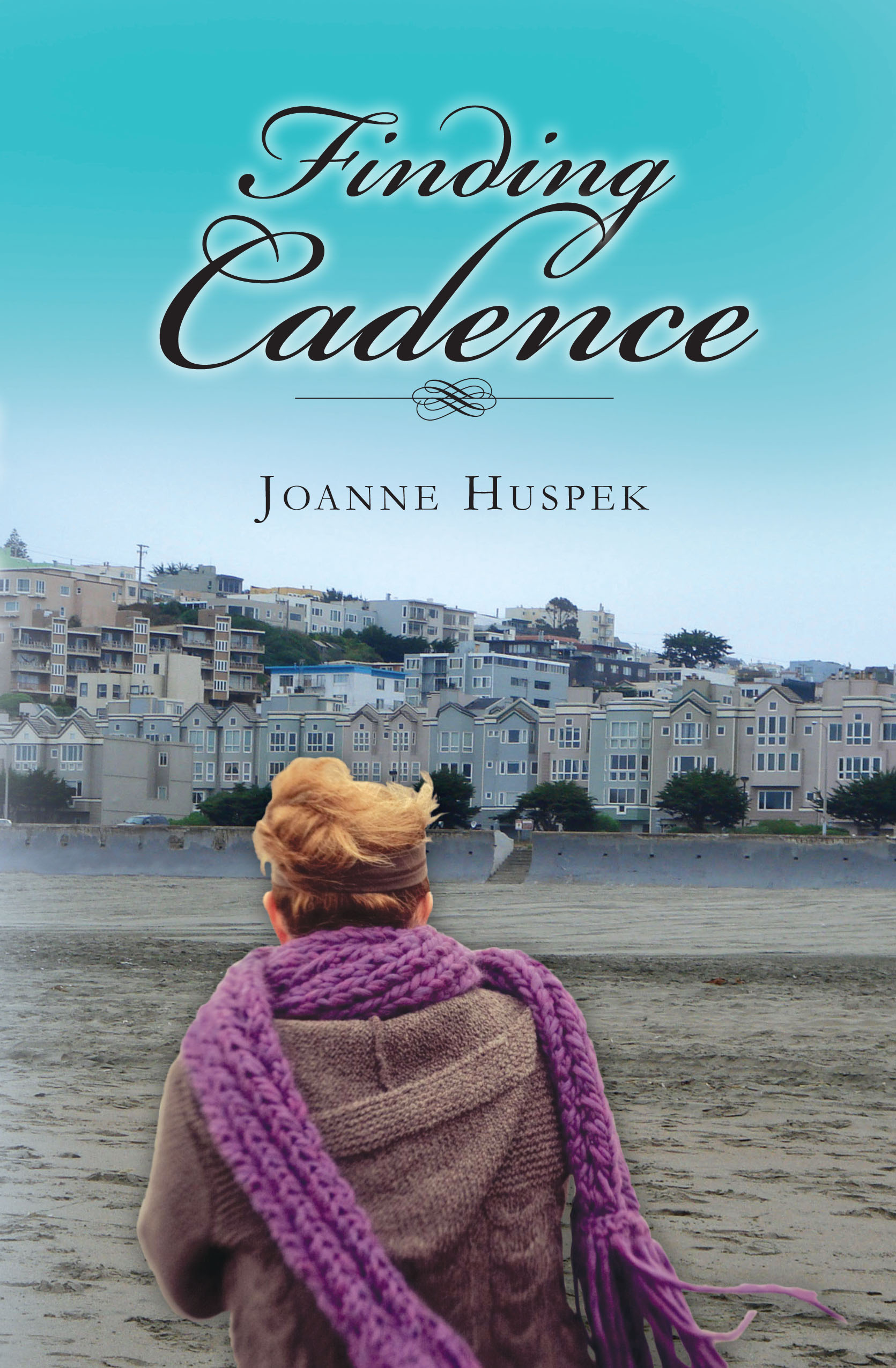
It’s nearly impossible to write 100K words and not use the same word or phrase a number of times, especially in dialogue. The reader learns about your characters through their speech. Still, nothing in the written word irritates me more than hum-drum prose, I didn’t want to sound boring. (My first incarnation of Cadence included several thousand uses of “family.” Oy. And OUCH.) With much thought, I kept most of my re-usable words down to 50 or less throughout the entire manuscript.

After you edit out the adverbs and adjectives, then the writer must take a look at the verbs. Passive verbs, a no-no-no. Finding Cadence was once full of passive verbs, perhaps because when I first started writing, Cadence was a passive woman, and I was a passive writer. While toughening her up, I became the warrior writer. All it took was to take the “was” out. “I was looking” turned into “I looked.” (This is a gross simplification, of course.) It’s so brainlessly easy, I don’t know why I didn’t see it before.

And of course, there are the weak, junky verbs: brought, came, enter, gave, held, go, turn, look, stare, watch, struck, ran, move, climb, remove, put, stand, saw. Weak verbs are precisely the reason why I reach for the Thesaurus.

Recently, I’ve taken to tightening up even more. I call this method of editing getting out the fluff and stuff. For one thing, I noticed that I use “something” and “everything” way too much, even in dialogue. I evaluated my usage: Perhaps the speaker knows what the “something” or “everything” is, but does the reader? Is it implied in a previous passage? If that’s the case, you don’t need it. If it’s not implied, it’s necessary to spell it out. Yes, I know what I’m seeing in my head, but the reader may not see it with the words I choose.

You’ll want to delete overused phrases – “at the end of the day” or “through the years” etc. and the purple-y, clumsy prose.

Editing out the fluff and stuff isn’t easy. It may be a harder edit to accomplish. You’ve been looking at your words for months (or in my case, YEARS). You’re invested in your character, you think about the time you’ve spent, the blood, sweat and tears and labor pains. It’s a lot to push that all aside and do the right thing. (And if you’re like me, you’re a horrible proofreader anyway.) What I’ve found is that my paragraphs are lean and mean, and I’ve managed to pare down my word count. (Yes, I’m paring DOWN. I have too many words!)

My advice is to take the plunge. It may take a lot to trim and tone, but in the end, it might be the best exercise your manuscript will ever get.


Posted in books, DIY, editing, indie publishing, Joanne Huspek, music, violin, writing, women, life, NaNoWriMo, people, querying, reading, rewriting, Self publishing, Uncategorized, womens literature, writing | Tagged , , , , , , , , Comment

I spent Friday and Saturday in the Michigan Silversmith Guild booth at the Ann Arbor Art Fair, where I drank lots of water in stifling hot and humidity and hoped to sell a bunch of my creations.

(As luck would have it, my newly re-named “Merkabah” (in honor of my author-friend, LZ Marie) bracelets sold out by Thursday afternoon. Win for me.)

As with writing, I do a fairly decent job of making jewelry, but I’m not such the hot commodity that I can quit my day job. If only…

It’s hard to compete at the art fair. It’s the self-proclaimed largest one in the country, and that means creativity is oozing from every pore of every human being within five miles of the A-Squared. Plus, each Guild member is a great talent, and there are twelve of us sharing a booth. I have no idea yet how I did, as I haven’t picked my inventory up. Hopefully, it’s enough to cover the booth rent.

While my jewelry is cool, it’s also rather eclectic. Steam-punk-y. Left of center. Big! With lots of rocks and stones, and lots of twisted wire. It takes a certain type of person to wear one of my creations; my art is not meant for mass consumption, which is why I don’t mind that I’m not deluged with fans. I like the slow and easy pace of creating. I’m lazy! Well…lackadaisical. Art of any kind for me is about the journey, not about the cha-ching at the end of the road.

Which is why I price my stuff reasonably. I love the creative process, but I don’t ever want to see my work again. Let someone else love it.

At the end of the final day, a couple of older ladies stepped up to the booth. One was enamored of this:

pendantsold

(It’s copper, with pyrite, agate, citrine, and peridot. And I made the chain and clasp.)

The other lady preferred my silver creations. It was late, nearly the end of the fair, but I pulled out piece after piece (after piece – I sometimes forget how many pieces I have!) and they both ooh-ed and ahh-ed.

The one woman, however, kept coming back to the copper pendant. She really loved it.

She asked me for a discount. I gave her a little bit of one, but she hesitated. She was a little older and lived on a fixed income, but her friend was encouraging. She eyed the piece, fingered it, kept bringing it to her neck and back again, looked at herself in the mirror. I explained the hours of work I’d invested in the piece, that making the chain itself was a pain in the behind, that the peridot alone was worth a lot of money. She said she understood.

They both spoke of losing family members in the last year. These were new friends, their bond made while in group grief counseling. Shopping the art fair wasn’t just retail therapy, it was a search for some sort of beauty in a tumultuous life, a life that wasn’t always fair.

Again they came back to the copper pendant. Lady’s Friend said, “You should get this. The way it’s designed, it really speaks to you.”

Lady: “Yes. It’s just like my life.”

What could I do? I discounted it more, and she walked away happy.

I’m happy too. Happy that she’s happy.

You might ask why I’m writing about this, when this blog is all about the writing experience from my perspective. Basically it’s this: sometimes writing, like art, isn’t about making money. Oh sure, money is nice, it’s real nice, especially if you have bills to pay.

A writer can get frustrated with creating, with the editing process, with querying, with rejection. You might want to skip over the journey to get to the pot of gold. If you feel that way, DON’T DO IT. It’s not about the money, and if it is for you, you’re in the wrong line of work. Sometimes you have to give joy to get joy.

Spread that mantra around to the rest of your life, and you’ll find contentment.


Posted in books, DIY, editing, Finding Cadence, indie publishing, Joanne Huspek, music, violin, writing, women, life, NaNoWriMo, people, querying, reading, rewriting, Self publishing, Uncategorized, womens literature, writing | Tagged , , , , , 1 Comment

I keep my Twitter-feed open while I work at my day job. You never know what might pop up. Most Tweets are mundane (like my own regarding my craving for horseradish), some are hilarious (Texts from Last Night, or my daughter’s arcane musings as a hipster in San Francisco), but mostly I use Twitter as a writing reference. Lots of good articles on these Internets, you know.

Oh. And I *discreetly* stalk agents and authors.

So this Tweet recently pops up. Truer words have never been spoken.

Amy Boggs ‏@notjustanyboggs 7m A reminder not to respond to reviews. Once your book leaves your hands, it’s no longer solely yours. You can’t control how readers react.

Thinking about reviews is a timely subject. While on my quick trip to Colorado, I finished two novels, one by an author-friend, the other a random novel I picked up at Barnes and Noble, one with a photo of the Golden Gate Bridge on the cover. (I’m such a sucker for these covers. Authors should slap a photo of the Golden Gate on every cover, no matter what the genre, and I’d buy the book. Yeah. Math for Dummies with a photo of the Bridge on it-priceless.)

Once home from my voyage, I did the Goodreads thing and logged that I’d read the books and also gave my reviews. I rarely have time for words, but I make use of the star ratings. While there, I scrolled down to read the reviews of other readers.

Okay, so I’m clueless, or perhaps just too busy to peruse the entirety of the Goodreads web site. Or maybe I never noticed that readers were writing such comprehensive reviews. Tons of readers, dozens of reviews.

Each book had both huge fans who wrote glowingly of great story lines and meaningful social situations, and those non-fans who panned the book in question, saying that the characters were shallow or the proof-reading was flawed, or something else didn’t appeal. Blah, blah, blah. While it’s interesting to read what others think, their opinions will not sway my opinion of the author or the book.

(It’s actually amusing. Like reading the comment section of the Huff-Po Political Page.)

In fact, I have purchased books because they’ve gotten bad reviews. Largest case in point: Fifty Shades of Gray, although I’ve also purchased other books simply because someone else hated it. I guess I need to see for myself. Besides, every book is worth something, even if it’s horribly written. The author obviously put in time, effort, and energy into producing a novel. To me, even a self-published e-book is worth a spin, if you have the time to read it.

I know my own book and my past articles have reviews. I’ve read them, but I don’t take them to heart. Like Ms. Boggs says, once your work leaves your hands, it’s no longer your baby. It’s sprouted wings and belongs to the masses. If every sharp word from a reviewer causes a pang, perhaps you should consider a different calling than writing. As authors, you certainly don’t want to get dragged into a shouting match with a person who has penned a bad review on your baby. Smile, take a deep breath, and walk away. Silence is golden.

That’s my wise word to the author. For readers, I would weigh each book review carefully. What appeals to one person might not appeal to you, and vice versa. Don’t judge a book by its review.

Watching reviews is like watching the white waters of a swollen river. It might be pretty, but you don’t want to go near. If you’re a writer, write something else; if you’re a reader, pick up a book.


Posted in books, DIY, editing, Finding Cadence, indie publishing, Joanne Huspek, music, violin, writing, women, life, NaNoWriMo, people, querying, reading, rewriting, Self publishing, Uncategorized, VIRTUALLY YOURS, womens literature, writing | Tagged , , , , , , , , , Comment

My first self-published book, Virtually Yours, is a tale of Internet relationships. The online moms’ group featured in the novel is loosely based upon an online group I’ve belonged to since the mid-90’s. We’d met each other in an AOL chat room on our way to scoring Beanie Babies for our then-babies, and somehow forged and maintained the friendship for the last almost twenty years. (Almost twenty years – holy cow!) We have weathered relationships, breakups, hook-ups, our kids growing up, Columbine, 9-11, job searches, health issues, family loss – you name the life change, and we’ve lived through and commiserated with each other over it.VIrtually Yours (300dpi 2700x1800)

I penned the second novel in the series, Virtually Yours Forever, about a year and a half ago. (Yes, there might be a third in the works. I have ideas, lots of ideas. 🙂 Once I get a spare minute to get them down…Ah, ha ha ha….) For those of you who have been waiting patiently for me to produce VY4Ever, yes, I know. I’m slow. VERY slow. I’ve been picking at a couple of other projects at the same time. I swear, I have adult onset ADD, because just when I get going on one track, a shiny bauble tempts me from the other side of the room – or my laptop.

Now comes Real Life word that might get my butt into gear with regard to finishing the sequel.

One of my Beanie Mom friends has invited all of us to her daughter’s wedding…in Las Vegas, this September! At the Bellagio! Can you say O-M-G?

Now I have met some of the moms at various points in the last decade and a half. There are a couple who I’ve missed, for whatever the reason. It’s far easier to maintain a long distance relationship with the Internet and cell phones, a helluva lot easier than it was 20 years ago when we emailed, arranged to meet in private chat rooms, or snail mailed. Although we still maintain our email ‘loop’, we now have a private Facebook group, and we send each other group texts on a regular basis. We keep in touch using Instagram and Pinterest. It’s like we’re right next door, even though we’re all over the country.

This might be the first time we’ll all be in the same place at the same time, and you can bet I’m going to do my best to be there.

What is funny is that the premise of VY4ever is a wedding gone (partially) awry. (There are some other things going sour too, but I’m not going to spoil it by revealing too much.) While I don’t wish sweet Rachel (the Real Life bride) and her mother a wedding from hell, you can bet your booties if I make it to the ceremony, I’m going to take furious notes.

Honest to God. A writer needs Real Life. Some things you just can’t make up.

Posted in books, DIY, editing, indie publishing, Joanne Huspek, music, violin, writing, women, life, NaNoWriMo, people, querying, reading, rewriting, Self publishing, VIRTUALLY YOURS, womens literature, writing | Tagged , , , , , , , , , , , Comment

I love social media.

Usually.

It’s fast, it’s easy. I can keep track of my friends and relatives without calling them. I can laugh at jokes and eCards, view photos and videos from all over the world, and shop for bargains. I can monitor world events, see what’s hot and what’s not, and find large bits of useful and useless information, both meaningful and dumb. I gave up my newspaper subscription, because 1. the Detroit News is a shadow of its former self, 2. news is readily available online, and 3. my bird died.

I especially love social media because I write. Twitter, Facebook, Goodreads (social media for writers), and Instagram – writers tend to use these forums to dispense information. I can check out my favorite authors’ new releases; I can research people and places; I can stalk agents (discreetly) and find out what they really think about us poor, helpless writer-schlubs. I can learn about upcoming contests quickly, thus freeing me from blog hopping all over the information superhighway. Saves both time and aspirin.

But social media isn’t all about ONE THING. It’s…well, social, meaning that what happens in the world spills over with some of these personalities. Believe me, I have narrowed my follows to people I really know or like, or authors, writers, agents, and/or others in the business. While I tend to shy away from the troll types, I engage with people who, quite frankly, I don’t agree with on many issues.

I’m not a pithy Tweeter, and I try to stay away from Facebook as much as possible. I love to be sociable, but these Internet water cooler-coffee klatch-parties are a time suck, my friends. My plate overfloweth. I run a business, a household, and I’m trying to write in between many crushing Real Life commitments.

That being said, while I like a nicely executed verbal exchange of ideas, there are things I do not like. One, I don’t care for a constant battering of positions which inevitably winds up some hapless soul being virtually lynched. I (and others) can have our opinions without being called stupid or worse.

Recently, I’ve noticed the online tone changing from an exchange of ideas to a pity party, where people tend to play the victim card with every revelation or change in government. I don’t care if you’re white, black, red or purple, I don’t care if you’re a man or a woman, straight or gay, born here or (like me) not, if you had perfect loving parents or were abused, I don’t even care if you’re a Donkey or an Elephant. Honest to God, when I look at people, I see none of this.

What irks me more than any or all of these distinctions is that people tend to claim victimhood as a valid argument for any position.

I suppose it’s because I’ve had my craw full this week. Not only do I see this online, I see this in offline relationships. If your mother was a child abuser, if your skin is a certain color, if your spouse cheated, if your boss is a bitch – all these are reasons to justify bad behavior. WHAT? (That sound you heard was my head hitting a brick wall.) First of all, why give the other side that much power? Secondly, if you’re over 18, why not own your situation and carry on? If you have brains and strength and chutzpah, figure out your problems and devise a workable solution.

I am a woman, I am of mixed race, I am old, I have issues. I’m flawed BIG TIME. A physically and emotionally abusive mother raised me. Never once in the last 57 years have I blamed any of my shortcomings on my external environment, that the “man” was keeping me down as a woman or anything else. That’s because I control my life and my destiny, and the parts I can’t control I deal with the best I can.

After ruminating on this revelation and my subsequent annoyance for a few hours (after shutting down Twitter, because I couldn’t stand it anymore), I realized that the victim card is played by aspiring authors too. I’ve been to plenty of writers conferences where there are a few disgruntled and unhappy attendees. They see other writers as enemies or rivals, and agents as tyrants. Perhaps their manuscripts aren‘t the next Harry Potter and need more work. Instead of taking control of their work and their destiny, they choose to play the blame game.

It’s so much easier, right?

Grow and let go.

Rant over.

Posted in books, DIY, editing, Finding Cadence, indie publishing, Joanne Huspek, music, violin, writing, women, life, NaNoWriMo, people, querying, reading, Self publishing, VIRTUALLY YOURS, womens literature, writing | Tagged , , , , , , , , , , , , , , 3 Comments

I’m pretty sure I sound like a blonde on the phone. In fact, I know I sound blonde, because I’ve had people (employees) who know me by phone only, meet me later and tell me so. (They also think I’m a lot taller than I am.) It’s likely disconcerting to discover that your boss is a short Asian woman, especially after your imagination has convinced you that I’m fair-skinned and statuesque.

(I’m only bringing this up because my daughter decided to dye her hair blonde this weekend. This has nothing to do with anything…)

When analyzing the “why” of this phenomenon, I can only come to one conclusion: It’s my voice. I laugh too loud, my humor is left of center, and I am overly emotional. (I have no theories about the 5′ 8″ supposition.)

I’ve often said that I write like I speak. Which isn’t completely true, because my mouth is not as fast on the draw as my brain. (That’s why I started writing, because speaking was difficult.) It is true in the sense that I pepper my speech with words and phrases I’m in the habit of saying – we all do this, it’s human nature. My own father was fond of “evidently” and “Suzie Q.” But when writing and/or reading, we don’t need those extra filler words.

Take the first sentence of this blog post:

I’m pretty sure I sound like a blonde on the phone.

This is how I sound in real life – full of adverbs, when all I wanted to say was this:

I sound blonde on the phone.

Now that I’ve been writing seriously, as I edit, these filler words stare back at me with the illumination of a thousand suns. It’s amazing how worthless they are. I’d been told many times before that the mind skips over these words as they’re read. Since I had originally written the words, I didn’t believe it – until the edit. Heck, if I can see I don’t need them, I probably don’t.

However, writing how you speak does have an upside. Let’s say you’re working on a novel in first person. If your main character is middle aged and high class, or a teenager with attitude, or a sassy thirty-something in search of love, you can imbue some of these characteristics in speech. Or, in period pieces like Monte Schulz’s This Side of Jordan, where the rag-tag cast of characters from the Depression era says things like “My cousin Frenchy eats crawdads cold,” a hint of uneducated dialect goes a long way in portraying the look and feel of the character. (Just so you know, the book also features also a dwarf who is extremely well-educated; you know this through his dialogue.)

Writing how you speak has a bad and ugly side, however. Too much can be too distracting. The reader can get the gist of a heavy accent with a light touch. The author does not have to misspell words in order to get the point across. The reader will tire of a character who (perhaps like you) has trouble conversing.

Personally, I have to be in the mood to write in first person as a character. For Amberly Cooper, I have to listen to a lot of teenagers beforehand, the more self-absorbed the better. For Cadence Reed, I have to either read deep, depressing novels or watch movies that make me cry. I had the worst time when I wrote Virtually Yours, a book with seven distinctive characters from different parts of the country. My first draft found all of the characters sounding the same – like me. Slowly, I had to separate the “me” in my characters and give each of them believable voices of their own. I accomplished this by talking to people in various parts of the country and listening to their speech patterns.

If you’re like me and write like you speak, make sure your edit is thorough. Your writing must convey character, but it must also make sense.

Posted in books, DIY, editing, Finding Cadence, indie publishing, Joanne Huspek, music, violin, writing, women, life, NaNoWriMo, people, querying, reading, rewriting, Self publishing, VIRTUALLY YOURS, womens literature, writing | Tagged , , , , Comment